The Waterproof Label Is Not a Complete Specification
A waterproof label can conceal important differences. Learn which construction, seam, closure and test details to compare before choosing sports equipment.
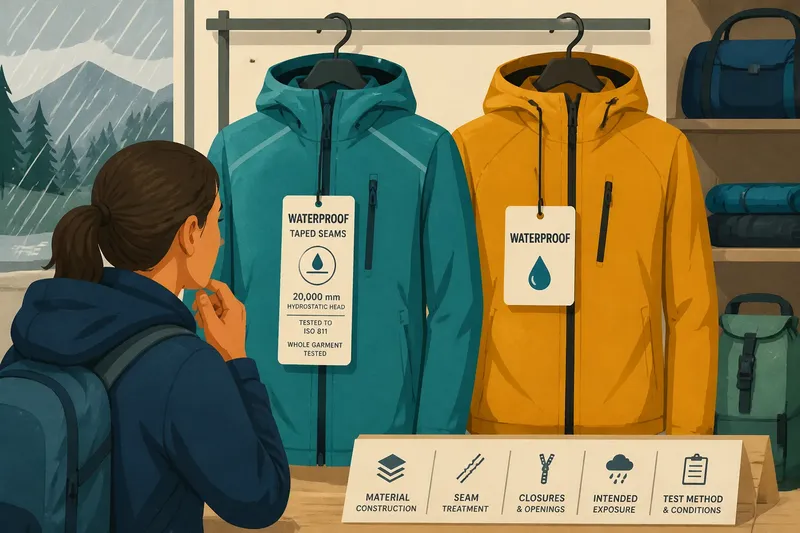
You are looking at two waterproof cycling jackets in a shop: one has taped seams and a stated water-pressure rating, while the other offers only the word “waterproof”. The label sounds decisive, but it does not tell you whether the garments were assessed in the same way or designed for the same conditions. To compare waterproof sports equipment sensibly, separate the claim from the details that give it meaning.
What does “waterproof” actually tell you?
On its own, “waterproof” is a broad product claim, not a full description of how an item behaves. It does not specify how long material resists water, how much pressure it can withstand, or whether the entire assembled product was assessed rather than a piece of its fabric.
That distinction matters because water can enter through more than the main material. Seams, zips, pockets, vents, fastenings and openings all form part of the finished object. A fabric may resist water while a stitched seam or an exposed zip provides an easier route inside.
Nor does the label describe every use. A rain shell worn while walking presents different demands from a dry bag exposed to splashes, or a paddle-sports garment subject to sustained immersion. The word is the start of a comparison, not its verdict.
Which product details should you compare?
Before weighing two claims against each other, look for the construction details that affect the whole item:
- Material construction: Is the product made from coated fabric, a membrane-backed textile, or another water-resistant structure? The description should clarify what forms the barrier.
- Seam treatment: Are seams taped, welded, sealed, or left untreated? A note about seam construction is more useful than a general claim about the outer fabric.
- Closures: Check whether zips are covered or described as water-resistant, and whether cuffs, collars, lids or roll-top openings close in a stated way.
- Coverage: Identify which parts of the product are covered by the claim. A jacket’s fabric rating does not automatically apply to its pockets, and a bag’s body does not settle how its opening handles water.
- Test method and conditions: Look for the named method, the part tested and any stated conditions. A number without those details is difficult to interpret.
- Intended use: Check whether the maker describes protection from rain, splashes, spray or immersion. These terms indicate different kinds of exposure, not interchangeable promises.
This is not a demand for a technical dossier on every purchase. It is a way to notice what the label leaves unsaid and decide whether that gap matters for your activity.
Why do test figures need context?
Some products give a water-pressure or hydrostatic-head figure. In broad terms, such a test applies water pressure to a material sample and records when water passes through. It can help compare materials assessed under the same method, but it does not describe every feature of the finished garment or bag.
For example, a fabric result does not by itself tell you how the item’s seams, zip or opening perform. It also cannot predict every combination of movement, wear and weather. If one product gives a figure and another does not, the figure is useful information, but it is not a complete ranking.
Test conditions matter as well. Results from different methods may not be directly comparable, and a bare number without a method or explanation leaves the reader guessing. Look for a clear link between the figure and the item: what was tested, how it was tested, and which product parts the result covers.
How do construction and exposure change the comparison?
Water reaches sports equipment in different ways. Rain falling onto a jacket, spray hitting a sailing smock and a bag briefly set on wet ground are not equivalent exposures. A useful product description should make clear which kind of contact its design is intended to handle.
Construction shapes that answer. Taped seams can reduce leakage through stitch holes; a storm flap can cover a zip; and a roll-top closure can close a bag’s opening differently from a conventional zip. These features are not interchangeable, and none should be treated as proof that every part of an item is sealed.
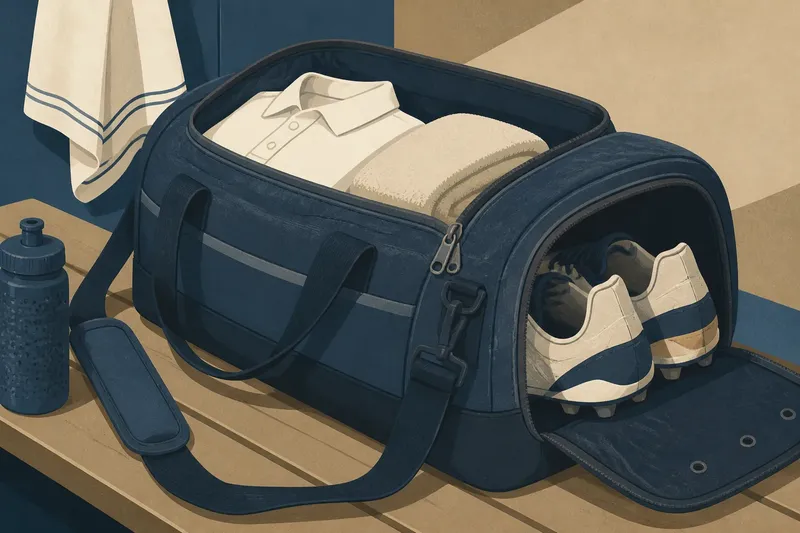
Consider an invented situation: you need a bag for a football kit that may sit on a damp touchline, not one for submersion. If one description specifies a coated body and a covered zip, while another simply says “waterproof”, you can compare the stated coverage and closure with your likely exposure. The expected observable difference is that the better-described option gives you a clearer basis for judging whether its vulnerable opening suits that use; the label alone does not settle the choice.
Which questions help you read a waterproof claim?
Does waterproof mean suitable for immersion?
Not necessarily. A claim may refer to resistance to rain or splashes rather than submersion, so look for an explicit intended-use statement before assuming the item can be immersed.
Is water-resistant the same as waterproof?
The terms are often used to indicate different levels or kinds of protection, but wording varies between products. Compare the stated exposure, construction and test information rather than relying on the adjective alone.
Can a fabric rating describe the whole jacket?
No single fabric figure describes seams, zips, pockets and openings unless the maker explicitly says those parts were included. Treat a material result as information about the tested material, not automatically the assembled garment.
What if a product gives no test method?
You can still assess its stated materials, seam treatment, closures and intended use. If the missing information is central to your decision, ask the retailer or manufacturer what the claim covers instead of guessing from the label.
What is worth checking, and what is not?
For an ordinary purchase, read the product page or hangtag for the material, seam treatment, closure design, intended exposure and any named test method. Then compare like with like: a rain jacket against another rain jacket, or a splash-resistant kit bag against another bag designed for similar use.
Where a product’s claims depend on its label, manufacturer instructions or local rules, follow those details rather than applying a general interpretation. For a sports item whose failure could create a safety risk, seek advice from a qualified professional or the manufacturer before relying on it.
What is not worth the effort is treating a lone rating as a universal score, or chasing a technical figure that says nothing about the parts most exposed in your use. A waterproof label becomes useful when you can connect it to construction, coverage and conditions. That is the difference between reading a claim and understanding what it actually describes.