A Kit Care Routine for the End of a Playing Day
A kit care routine helps sort damp clothes, muddy footwear and used gear after play, so each item can dry and be stored without avoidable wear.
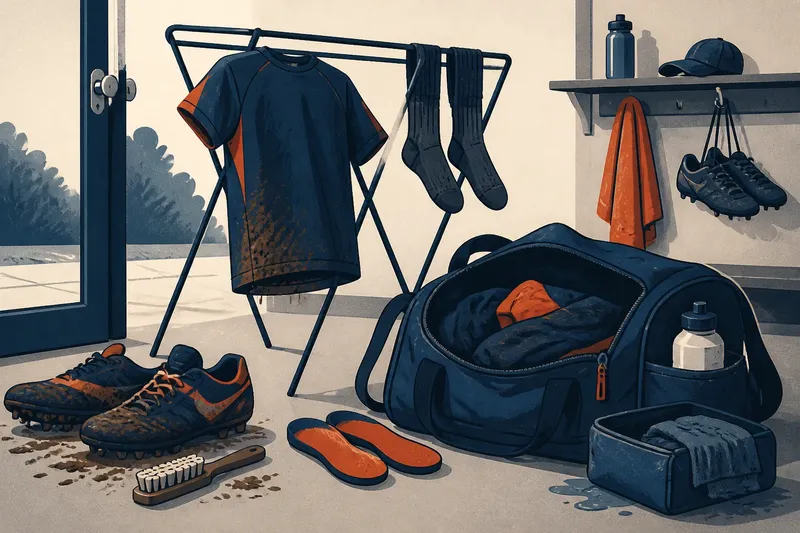
The kit care routine often begins beside the front door: muddy boots, a damp shirt and a water bottle all competing for the same patch of floor. Sorting them before they disappear into a bag is less about perfect housekeeping than preventing one wet item from turning the rest into a warm, stale parcel.
Use care-label directions first, then treat the routine as a sequence: separate, clear, air and store. If a label or maker’s instructions give different guidance, follow those rather than general advice.
Why does kit smell after it has been put away?
The usual culprit is trapped moisture. Sweat remains in clothing, socks or padding, while a closed bag slows drying and holds odour close to every surface. Leaving damp kit packed until the next session gives that problem a head start.
Take clothing and soft equipment out promptly. Open zips and pockets, turn garments inside out where practical, and hang items separately so air can reach both sides. A broad hanger or drying rack is more useful than a heap on a radiator; strong heat can damage some fabrics, prints, foams and adhesives.
If an item still smells after it has dried, wash it according to its label rather than adding extra detergent or fabric conditioner by instinct. Residue can cling to technical fabric, and conditioner may affect some moisture-managing finishes. A second wash is not a substitute for checking what the garment allows.
What should happen to muddy or gritty footwear?
Dry mud is often easier to remove than wet mud, but leaving a thick layer to harden can make it awkward to clear. Knock footwear together gently outside or over a washable surface, then use a soft brush on the upper and sole. Avoid scraping with a sharp tool, which can cut fabric or mark a finish.
Remove loose insoles if the maker’s care guidance permits it, and open the footwear as far as its lacing or fastening allows. Let it air at room temperature, away from direct heat. Newspaper can absorb some moisture, but replace it if it becomes wet; cramming in a large wad can distort a close-fitting shoe.
For studs, cleats or textured soles, check the spaces for packed soil and small stones. Clear what comes away easily with a soft brush or cloth. If a fastening is loose or a sole is separating, set the footwear aside for inspection rather than trying to repair a structural fault with household glue.
How do you deal with a bag that is damp inside?
First remove everything, including small items tucked into side pockets. Empty wrappers, tape scraps and loose grit have a knack for becoming permanent residents. Wipe the lining with a clean, damp cloth if its care instructions allow, then leave compartments open to dry.
Do not put a damp towel, wet swimwear or a used bottle back into a closed compartment while the rest of the bag dries. Keep wet items in a separate washable pouch for the journey home, then take them out promptly. A pouch is for containment, not long-term storage; it can trap moisture just as efficiently as the bag.
Once the bag is dry, check seams, zips and handles for visible wear. Brush away loose dirt, and avoid forcing a zip past grit or an overfilled pocket. If it catches, empty the compartment and clear the track gently before trying again.
What if the kit is still wet at bedtime?
Prioritise separation and airflow, not speed. Spread garments on a rack or hang them with space between pieces; open bag compartments and leave footwear unfastened. A fan can move room air across items, but keep equipment away from heaters and do not use a tumble dryer unless the label permits it.
Say you return from an evening match with a wet shirt, muddy trainers and a damp kit bag. You take the shirt out and hang it inside out, brush loose soil from the trainers, then leave the bag open with its pockets emptied. The expected observable result is that each item has air around it rather than remaining bundled together; the kit may still need more time before it is ready to store.
When the available space is limited, choose a dry, ventilated spot and give priority to the items that are wettest. Do not pile damp clothing over footwear or use a sealed cupboard as a drying room. There is little value in buying a specialised gadget for ordinary kit if a rack, open bag and a clear patch of floor do the job.
Which kit care routine questions come up most often?
Can sports clothes stay inside out while drying?
Usually, turning garments inside out helps expose the side that held sweat, but seams, prints or delicate finishes may call for different handling. Check the label and hang the item in a way that does not stretch its shape.
Should boots be stored with their insoles inside?
They can be stored that way once both the footwear and insoles are dry, unless the maker gives other directions. If the insoles are damp, separate them temporarily where permitted so each surface can air.
Is a closed kit bag suitable for storing clean gear?
It can be, provided the gear and bag are clean and completely dry. For longer gaps between sessions, a ventilated cupboard or shelf makes it easier to notice lingering dampness before it becomes a smell.
What should be done with a damaged strap or fastening?
Keep the item out of use if the fault could affect secure carrying or safe use, and ask the maker or a qualified repairer about an appropriate fix. Do not rely on tape or improvised stitching for a load-bearing part.
How should dry kit be put away?
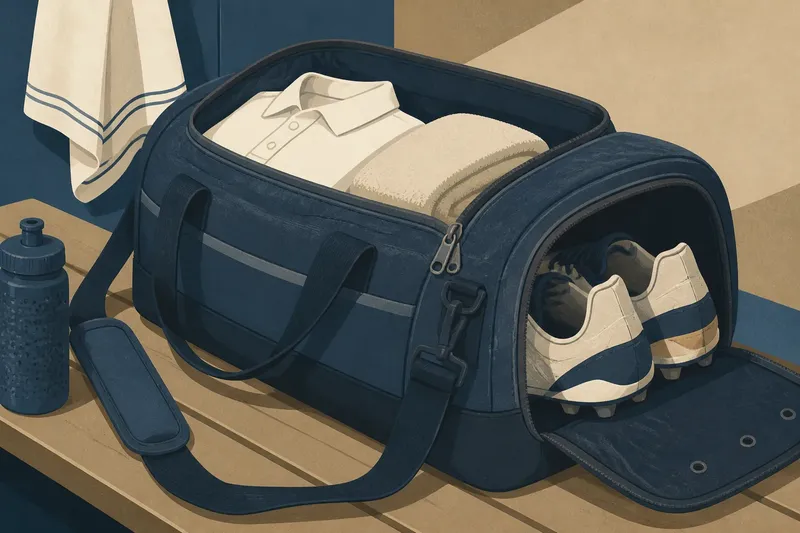
Store clothing clean and dry, with enough space that it is not crushed into a tight, damp bundle. Keep footwear in a ventilated place and avoid leaving it pressed against wet towels or dirty soles. Put small loose items, such as mouthguards or protective caps, in a clean container that can itself dry between uses.
Finish with a quick look through the bag: remove rubbish, leave the zip open briefly, and check that nothing wet remains in a pocket. A consistent kit care routine need not be elaborate. The useful distinction is simple: wet items need air before storage, and anything damaged deserves attention before it is packed for the next playing day.